Tinting Glass Bay Doors: 280 Windows for Stanislaus County Public Works
Full-view glass bay doors are great for daylight and brutal in a Valley summer. Here is how we filmed 280 windows for the County, and what any public facility should know first.
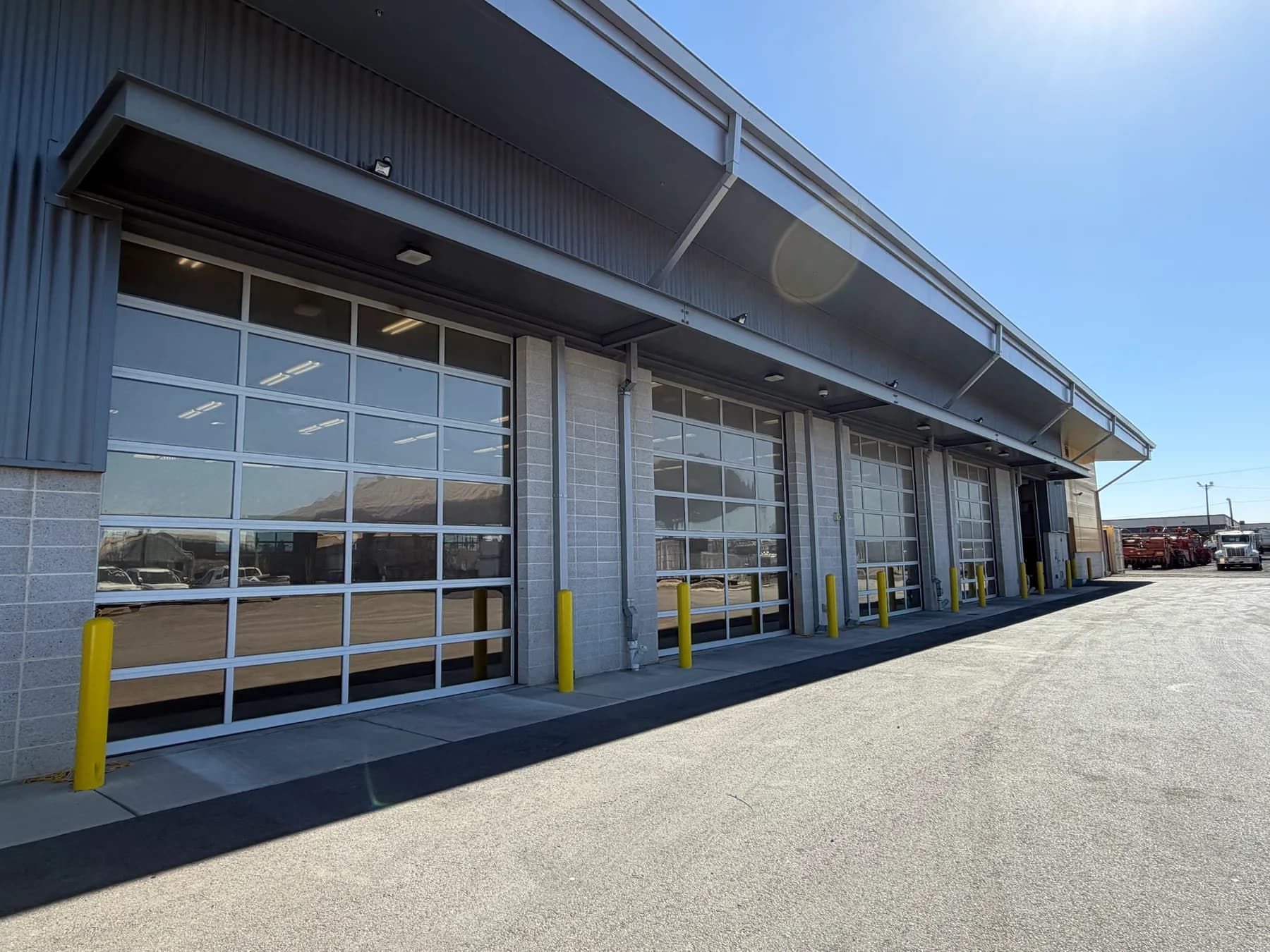
In September 2026 our crew installed Solar Gard TrueVue 30 window film on 280 windows at a Stanislaus County Public Works facility in Modesto. Much of that glass is set in full-view sectional bay doors — the aluminum-framed roll-up doors that are glazed from top to bottom and run bay after bay along the building.
The case study covers the job itself. This post is the practical side: why glass bay doors are such a heat problem, why film is usually the only sensible fix, why we chose TrueVue 30, and what to ask for if you look after a public building with the same kind of glass.
Photos and clips from the job, with what we specified and why.
See the County case studyWhy glass bay doors run so hot
A full-view door is mostly glass held in thin aluminum rails. Put a row of them on one elevation, face them onto an open asphalt yard, and there is nothing between the Central Valley sun and the shop floor. The light comes straight through, the concrete and equipment soak it up, and they keep giving that heat back long after the sun has moved.
Bays are also big volumes that are hard to cool at the best of times, and the glare problem is worse than in an office: sun bounces off the yard and lands at exactly the height people are working.
Why film, and not blinds or new glass
Most fixes that work on an office window do not work on a door that rolls up into the ceiling.
- Blinds and shades cannot hang on a sectional door. The door travels overhead on its tracks, so anything mounted to the wall or ceiling is in the way, and anything mounted to the door gets crushed.
- Painting or panelling the glass kills the daylight and the view of the yard — the reasons anyone specified glass doors in the first place.
- Replacing the glazing with tinted units is expensive and turns a film job into a door-replacement project.
- Film goes on the existing glass, moves with the door, and leaves the door hardware untouched.
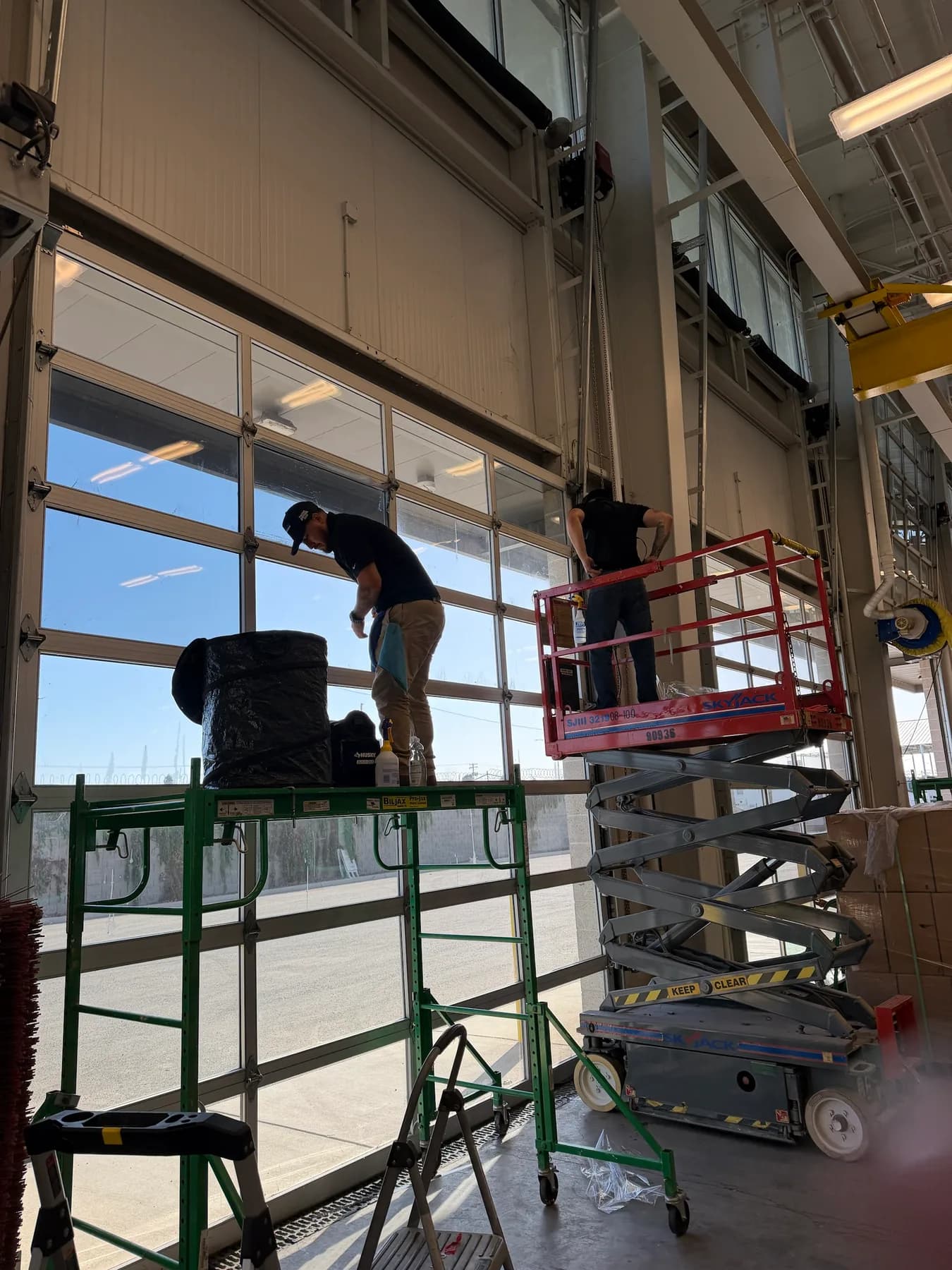
Why we chose Solar Gard TrueVue 30
The number in the name is the visible light transmission. Solar Gard lists TrueVue 30 at about 30% of visible light through, which is a deliberate middle ground for a working bay. Go darker and you cut more glare but the bays get dim and harder to see out of at dusk. Go lighter and you keep more light but do less about the heat.
TrueVue is what Solar Gard calls a dual-reflective film: it reads as reflective from the outside, which is why the doors look like a uniform run of glass from the yard, and neutral from the inside, so the view out stays clear rather than mirrored. Solar Gard's published figures for TrueVue 30 put total solar energy rejected at more than 60% and UV blocked at over 99%.
How you film 280 panes on doors that move
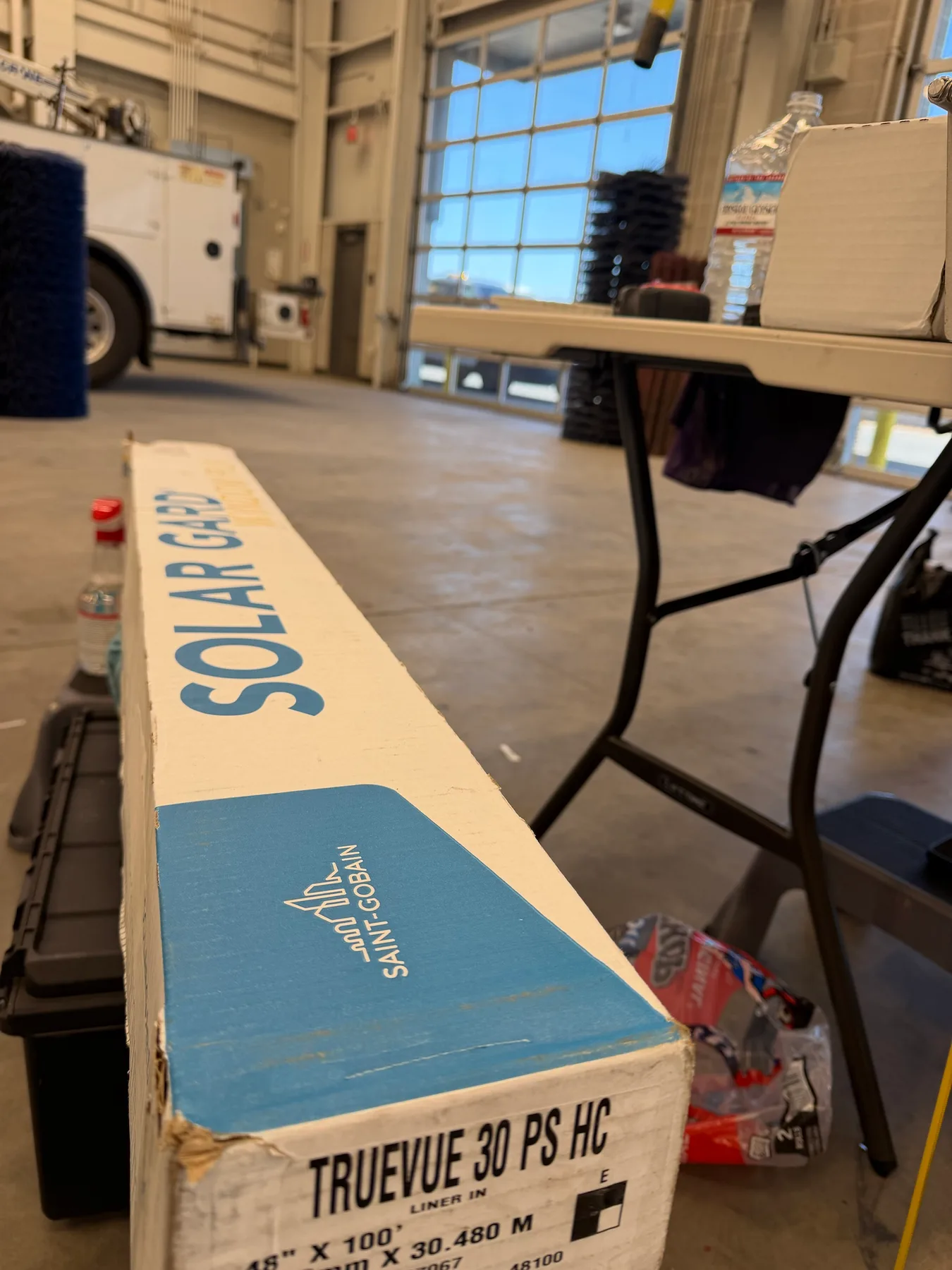
Every pane in a sectional door is its own piece of glass framed by rails, so a door is not one install — it is a stack of small ones. That is what makes the job slow if it is badly organised and straightforward if it is not.
- 1Count and log every pane. The window count sets the scope and the price, so it is fixed in writing before anyone starts.
- 2Clean the glass and the rail edges. Door gaskets collect yard dust, and anything left on the glass ends up under the film.
- 3Wet the glass and lay the film on a slip solution, so it can be positioned before it is squeegeed down.
- 4Cut and trim each pane to its own frame. With 280 windows, consistent edges are what makes the finished elevation look like one job.
- 5Work the lower rows from the floor and the upper rows from a scissor lift and rolling scaffold, so one door is being filmed top and bottom at the same time.
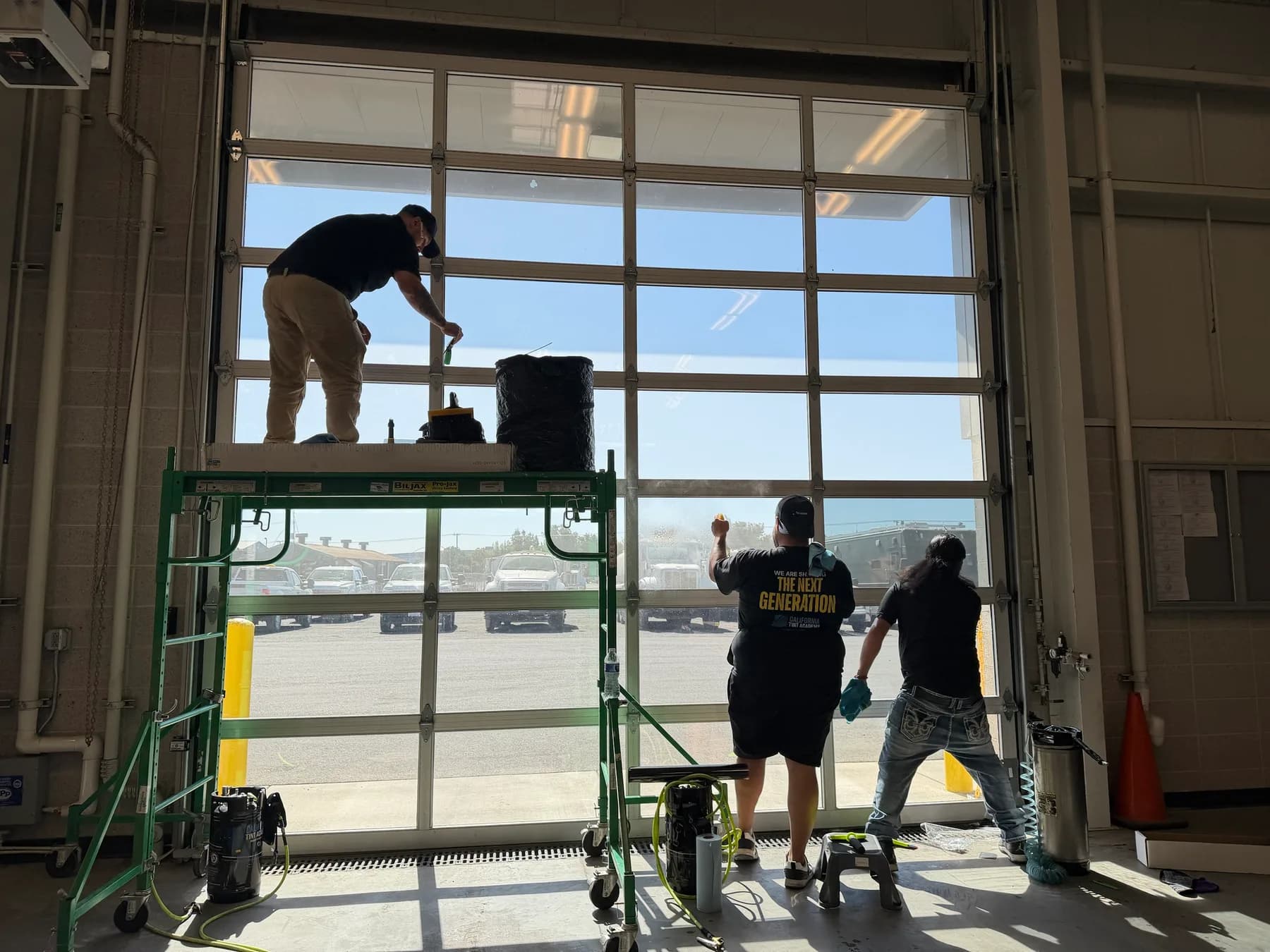
Like any wet-applied film, it needs time to cure. A slight haze or a few small water pockets in the first days are normal and clear on their own as the moisture evaporates.
What a public facility should ask for
Public buildings get bought on paper, and a window film quote should hold up to that. Whoever you get pricing from, ask for:
- The film by brand and product name, plus the manufacturer's data sheet — "Solar Gard TrueVue 30", not "30% tint".
- A pane count and a written scope, so the job you approve is the job that gets done.
- Confirmation the film suits your glass. Film has to be matched to the glass type, and that check belongs in the assessment.
- An access plan: which bays are out of use and when, and what lifts or scaffold will be on site.
- The warranty in writing, and any insurance or paperwork your agency requires, settled before the start date.
- One film across the whole elevation, so the building does not end up with a patchwork of shades.
Where else this applies
Full-view glass doors are everywhere in the Valley: fire stations, fleet and maintenance shops, municipal and corporation yards, dealership service drives and warehouses. The problem and the fix are the same whether the building is in Modesto, Turlock, Ceres, Oakdale, Riverbank or Patterson — a lot of glass, a lot of sun, and a door that cannot take a blind.
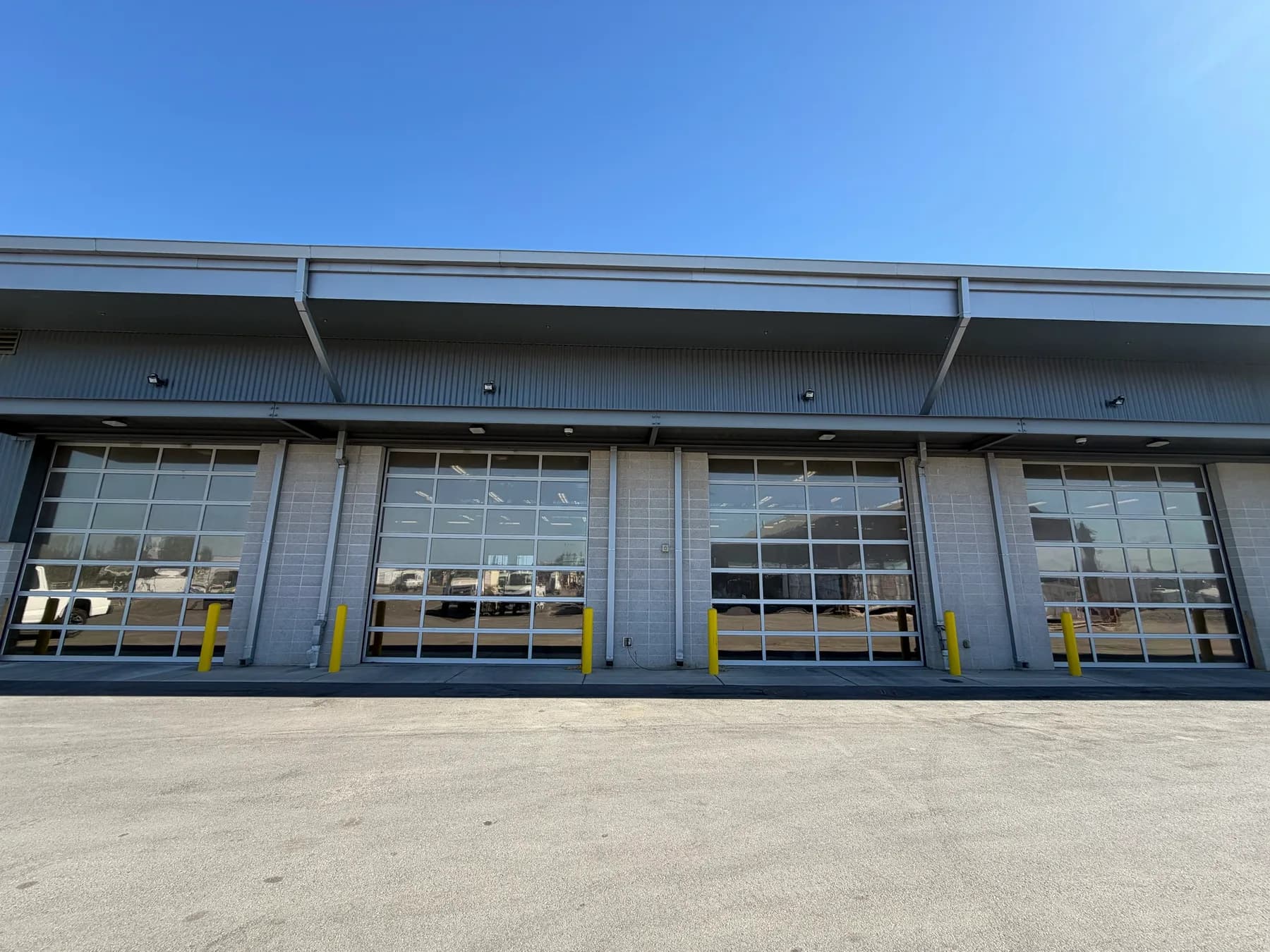
If your building has glass that takes the afternoon sun, we will walk it, count the glass, and put the film and the scope in writing — whether it is one storefront or a few hundred panes.
Commercial and government buildings across Stanislaus County. Free on-site assessment.
Commercial window tinting